
How to choose a power tower pull up dip station
Every power tower looks similar in a photo: two uprights, a pull-up bar, two dip handles. The differences that matter only show up in your room and under your weight. This is the checklist we use when people ask our desk which Sportsroyals power tower to pick.
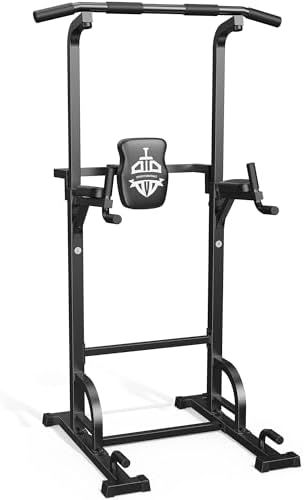
Our best-selling tower: long H base, 8 rubber feet · $169.98
1. Weight capacity
Add your body weight, any weight vest or dip belt plates, and the extra force of the bottom of a fast rep. Choose a tower rated comfortably above that total. Our frames go from 330 lbs on the compact towers to 800 lbs on the heavy-duty frame.
2. Footprint and base
A wider, longer base resists tipping during hanging leg raises and kipping. H-frame and A-frame bases are the most stable; compact bases suit small spaces where the tower stands against a wall. Put the tower on a mat and check that the floor is level.
3. Height and ceiling
Measure from floor to ceiling and compare with the tallest setting of the pull-up bar. Leave at least a hand's width over the bar so your head clears it at the top of a pull-up. Adjustable uprights let the same tower serve a tall athlete and a low basement ceiling.
4. Assist or no assist
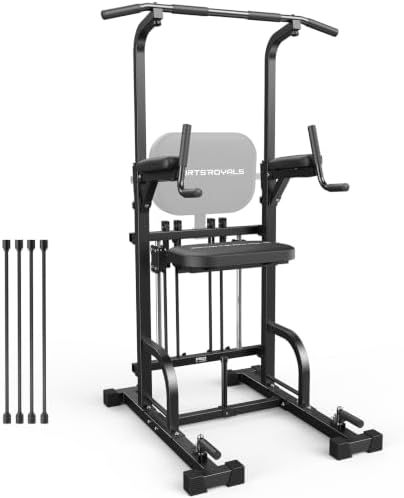
If you cannot do a full pull-up yet, choose an assisted tower with a foot platform or loop resistance bands over the bar. Assisted pull-ups train the same pattern with less load, and the band can be swapped for a lighter one as you get stronger.
5. Padding and handles
The back pad and arm rests carry your weight during vertical knee raises. Thicker padding and angled arm rests keep the elbows comfortable. Multi-grip bars add neutral and wide positions for different pull-up variations.
6. Stations you will actually use
Most towers cover pull-ups, dips, push-ups and leg raises. Some add a sit-up bench or band hooks. Pick the stations you will train every week rather than the longest feature list.
What a power tower is for
A power tower is a free-standing fitness machine built around bodyweight exercises. The pull-up bar trains the back and biceps, the dip station trains chest, shoulders and triceps, the back pad and arm rests turn the frame into a vertical knee raise and hanging leg raises station for the core, and the low handles give a stable place for deep push-ups. Few pieces of home gym equipment cover this many muscle groups in such a small footprint, which is why the power tower is the most versatile first purchase for strength training at home.
Power tower vs dip station vs wall-mounted pull-up bar
A dip station is lower and lighter and covers dips, L-sits and rows, but has no pull-up bar. A wall-mounted pull-up bar or doorway bar covers pulling, but needs a solid wall and cannot help with dips or core exercises on arm rests. A power tower combines both in one heavy-duty steel frame that needs no drilling. If you rent, if your walls are drywall, or if you want all the bodyweight training stations in one place, the tower is the better choice; if floor space is the only thing you lack, consider a dip station plus a wall-mounted pull-up bar.
Durability: steel, welds and finish
Durability of a power tower comes from the tube thickness, the number of reinforcement points and the finish. Look for heavy-duty steel frames around 2 mm thick, crossbars or reinforcement plates near the base, and a powder-coated finish that resists chips and rust. Check the rubber feet too: eight feet spread the load better than four, and adjustable foot covers keep the tower level on uneven floors.
Training for beginners
Beginners often cannot do a full pull-up on day one, and that is normal. Start with dead hangs, knee raises on the arm rests and incline push-ups on the low handles. Add assisted pull-ups with resistance bands or an assist pad, and reduce the assistance every few weeks. Within a couple of months most beginners can do their first unassisted rep, and the same tower keeps working as you build muscle and add weighted dips.
Core exercises on a power tower
Vertical knee raises and hanging leg raises are the signature core exercises of a power tower. Keep the back against the pad, lift the knees to the chest without swinging, and lower under control. As the core gets stronger, straighten the legs, add a pause at the top or, on a loadable station, add a light plate. Strong arm rests and thick padding make these sets far more comfortable than hanging from a bar.
Using a power tower outdoors
A covered patio or garage is a good place for a tower, and many owners train outdoor sessions in summer. Direct rain and sun wear the padding and the coating faster, so cover the tower after each workout, wipe off moisture and check the bolts every month. A level concrete pad or rubber tiles keep the base stable outdoors.
Accessories worth adding
Resistance bands are the most useful add-on: they assist pull-ups, add resistance to push-ups and anchor to the base for rows. Gymnastic rings hung from the pull-up bar add ring rows and ring dips, and a dip belt turns the dip station into a heavier strength training tool. A rubber mat under the tower protects the floor and reduces noise.
Overall: which tower to buy
Overall, the H-frame tower is the safest choice for most households: long base, wide height range, proven by thousands of owners. Choose the compact multi-function tower for low ceilings, the PT2 for tall athletes and grip variety, an assisted tower if you are building up to your first pull-up, the foldable tower for small spaces, and the heavy-duty 800 lb tower for weighted training and maximum stability. Every Sportsroyals power tower page lists weight capacity, footprint and adjustable height so you can compare before you buy.
Sportsroyals power towers side by side
| Tower | Capacity | Good for | Price |
|---|---|---|---|
| H-Frame Power Tower Pull Up Dip Station, 450 lbs | 450 lbs | most home gyms, first-time tower owners and shared households | $169.98 |
| Multi-Function Power Tower with Adjustable Foot Covers | — | basements, apartments and older homes with uneven floors | $127.49 |
| PT2 Multi-Grip A-Frame Power Tower | 450 lbs | tall athletes and anyone who wants several pull-up grips | $195.48 |
| Assisted Pull Up Power Tower with Resistance Bands | 440 lbs | beginners, heavier users and anyone returning to pull-ups | $279.96 |
| 5-in-1 Assisted Pull Up Bar Station, 450 lbs | 450 lbs | assisted training circuits and families sharing one tower | $269.99 |
| Heavy Duty Power Tower, 800 lbs, with Seated Leg Raise | 800 lbs | weighted calisthenics, heavier athletes and core-focused training | $349.99 |
| Foldable Power Tower Pull Up Station, 580 lbs | 580 lbs | shared living spaces, apartments and rooms used for more than training | $279.99 |
| Power Tower and Adjustable Dip Bar Station Bundle | — | couples, siblings and supersets | $226.77 |
From the power tower line
Power Tower
H-Frame Power Tower Pull Up Dip Station, 450 lbs
Our best-selling tower: long H base, 8 rubber feet
4.4$169.98
Power Tower
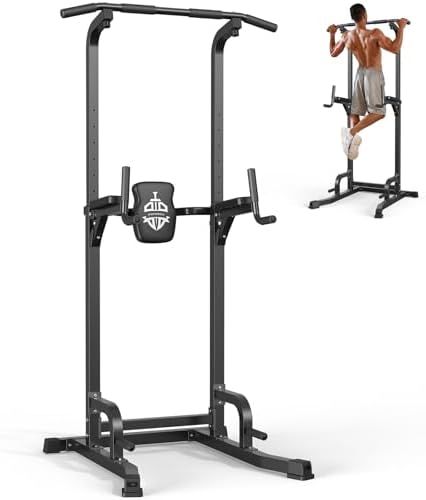
Multi-Function Power Tower with Adjustable Foot Covers
Compact Π base, 8 heights down to 57 in
4.4$127.49
Power Tower
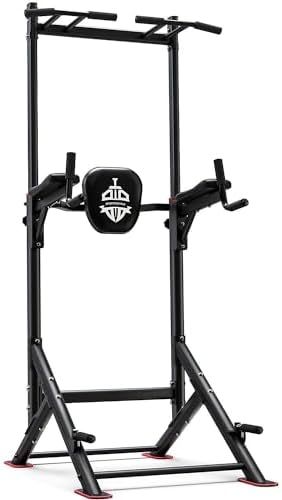
PT2 Multi-Grip A-Frame Power Tower
Dual triangle base, multi-grip bar, up to 92.7 in
4.4$195.48
Power Tower
Assisted Pull Up Power Tower with Resistance Bands
2-in-1 assist pad, bands from 22 to 88 lbs
4.4$279.96